Art and music exist because some things are too beautiful to exist as words alone.
Take Vivaldi’s The Four Seasons. You don’t need a musical ear to hear the birdsong of spring, or summer arriving heavy before erupting into a thunderstorm. Autumn celebrates the harvest. Winter’s rapid notes evoke the frigid cold.
Across four violin concertos, Vivaldi takes the natural world and turns it into music. He reminds us not only that something was beautiful, but why.
I thought about that often on my recent travels throughout Northern Italy, a place where beauty follows like a shadow.
The landscape doesn’t make this a challenge – especially in Italy’s lake region, where the scenery feels like a living painting. Lake Como shimmers beneath the sun while hydrangeas, cypress trees, and meticulously sculpted gardens compete for attention along its shores. Villas once belonging to Milanese nobility rise grandly from the water, romantic and imposing in their own right.
But look up at the Alpine foothills, and you realize nature still wins.
It would be easy to spend a journey through Northern Italy looking up – at the soaring spires of Milan’s Duomo, the iron-and-glass vaulted roof of the Galleria Vittorio Emanuele II, the rare white peacocks roaming the gardens of Isola Bella on Lake Maggiore, the medieval towers of Verona and Bologna, the marble palaces of Venice rising straight from the water.
But some of the most revealing expressions of Northern Italy weren’t in front of my eyes.
They were on my plate.
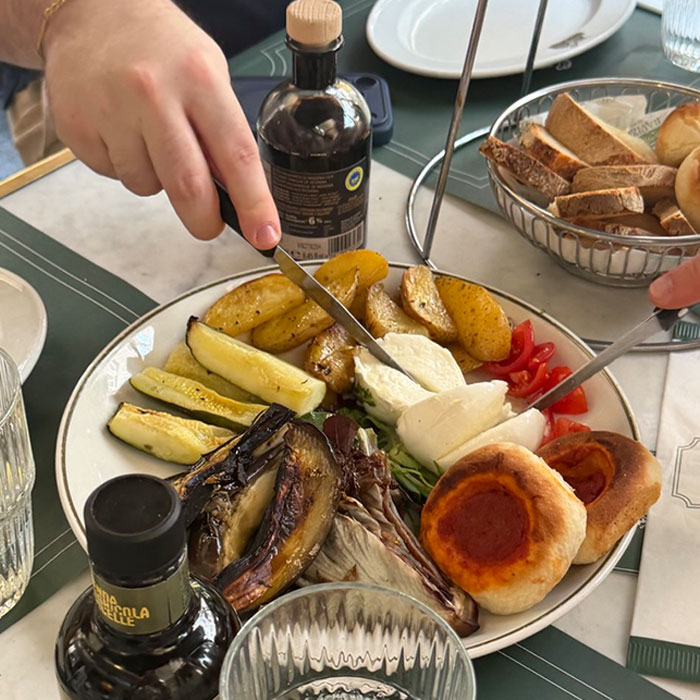
Milan: A taste for the moment
As late afternoon slips into evening in Milan, something happens across the city.
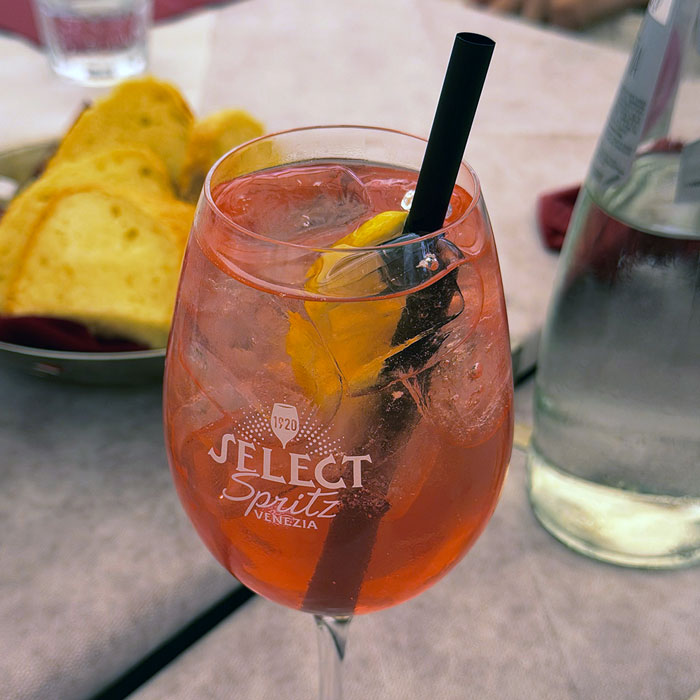
Tables fill with chatter. Wine glasses glow with the tangerine color of Aperol and Campari. Mint leaves float atop Hugo Spritzes. Small plates arrive with mortadella, olives, and focaccia, meant to be enjoyed slowly.
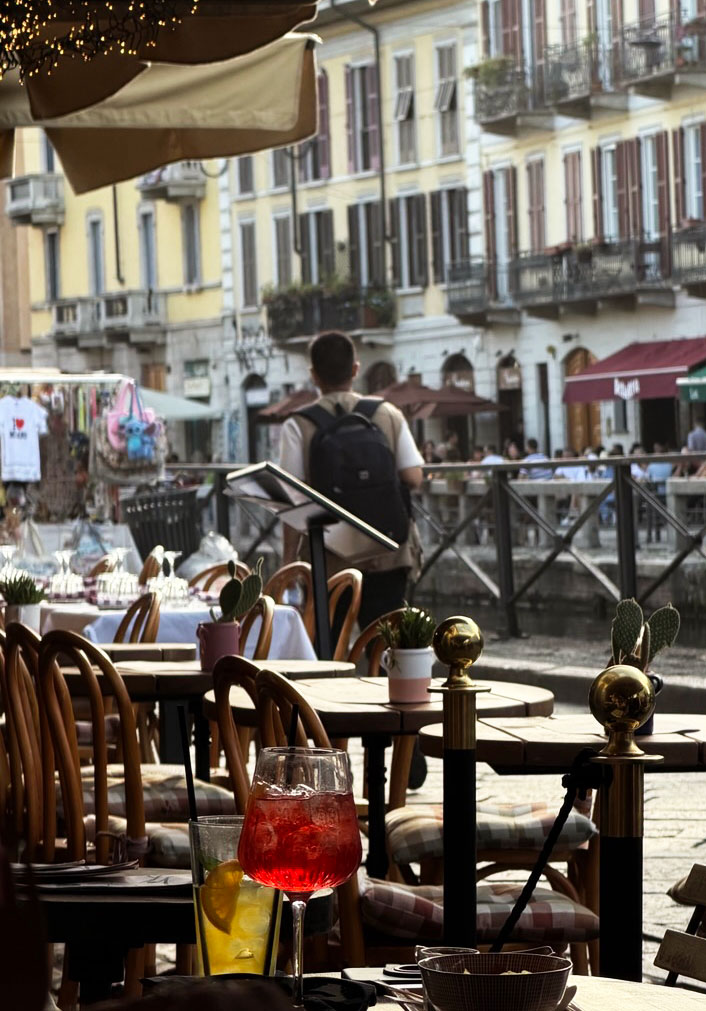
It can only mean one thing: it’s time for aperitivo.
The ritual has deep roots across Northern Italy, but Milan has made it an art form. Locals pause at almost any restaurant or bar before a late dinner, gathering around tiny tables, focused less on where they need to be next and more on who is sitting across from them. You hear la dolce vita paired with Italy so often it starts to sound like a slogan printed on a postcard. But in moments like this, you understand that the sweet life is less an aesthetic than a way of living.
I had always thought of Milan first as a capital of couture, the backdrop for Fashion Week. But the capital of Lombardy is also a city whose culinary identity is deeply tied to the landscape around it.
Risotto alla Milanese is unmistakable with its golden saffron hue, and there’s a reason risotto belongs here. Lombardy is one of Italy’s great rice-growing regions, its landscape shaped by rice fields and waterways that have supported cultivation for centuries. When you take a bite of risotto in Milan, you aren’t eating it simply because it’s delicious. You’re tasting a dish that could only have become what it is because of the land that surrounds it.
The more I ate my way through Northern Italy – across Lombardy, Piedmont, Emilia-Romagna, and Veneto – the more I noticed that relationship. The scenery and the cuisine weren’t separate experiences. One grew from the other.
Beauty requires patience
Some of Northern Italy’s most celebrated foods require an ingredient that can’t be harvested, bought, or manufactured: time.
You might already know this. But it clicked for me during visits to a winery, a Parmigiano Reggiano cheese factory, and a family-owned balsamic vinegar producer – places where the most celebrated flavors are defined as much by patience as by what goes into them.
Leaving Verona one morning, we traveled into Emilia-Romagna to see how Parmigiano Reggiano is made. There’s a small window each morning to get the process right, and watching it unfold feels like watching a sculptor at work. Fresh morning milk is combined with milk from the previous evening in enormous copper vats. The curd is broken down, gathered, molded, and divided before the newly formed wheels are submerged in brine and sent to wooden shelves, where they’re put in the hands of time.
The room where the wheels age reminded me of an enormous library. From the outside, they might all look the same. But each has its own story, and you begin to understand that by sampling your way through time – a crumble aged for twelve months tastes remarkably different from one that has waited considerably longer.
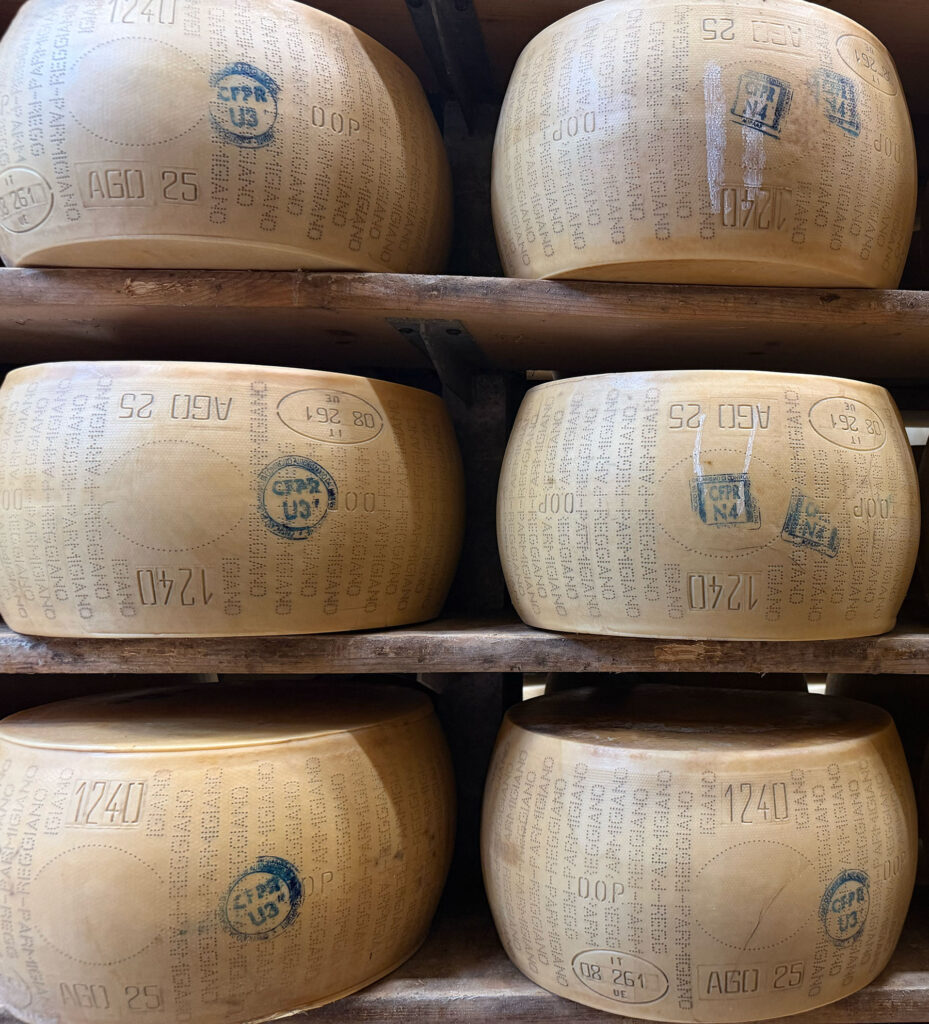
What a treat, to discover what time alone can do.
The same lesson appeared again, strangely enough, in traditional balsamic vinegar. Around Modena, grapes undergo a much slower transformation, aging in wooden barrels until something once simple becomes dark, complex, and intensely flavored. At a family-owned producer, the room was filled with rows of those barrels and the sharp-sweet scent of vinegar. But what caught my attention most were the names chalked onto some of them.
Families have long passed down batteries of balsamic barrels through generations, tying the tradition to births, marriages, and milestones. Looking at those names, I thought less about the spoonful of balsamic I’d just tasted and more about what those barrels represented: something carefully tended and preserved long enough to become part of a family’s story.
There’s something beautiful in that – in foods that ask people to wait, to protect what came before them, and to trust that time will make something even better.
Bologna: The cradle of gastronomy
Bologna has three famous nicknames: La Dotta, the learned, for its centuries-old university, the oldest in the Western world; La Rossa, the red, for the terracotta hues that color its rooftops and façades; and La Grassa – the fat – for a culinary tradition so deeply woven into the identity of the city.
Fortunately for me, La Grassa is best understood by eating. And eat I did.
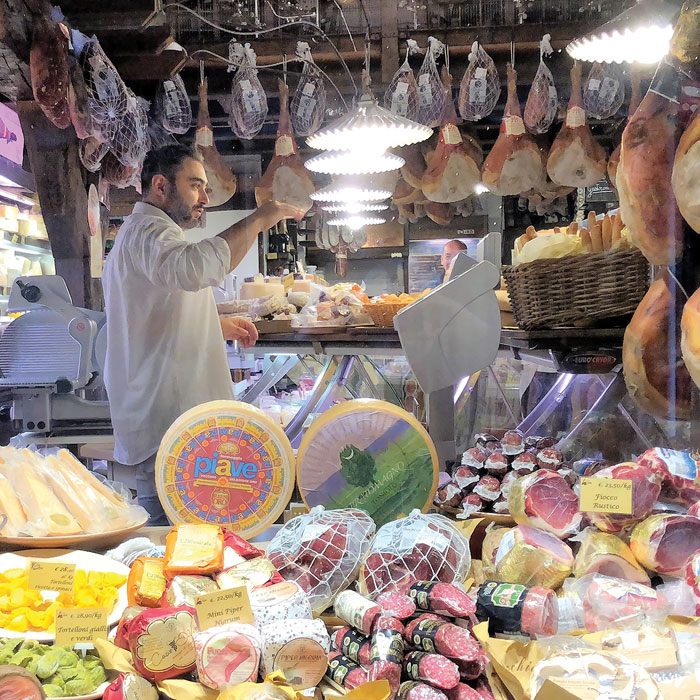
There was cotoletta alla Bolognese, a breaded veal cutlet layered with prosciutto and Parmigiano Reggiano, along with tagliatelle al ragù and tortellini. Wandering Bologna’s medieval streets, there was mortadella to taste along the way. For dessert, Amarena cherries tumbling over creamy gelato.
But a visit here isn’t complete without stepping into a kitchen and trying it yourself. Watching an experienced chef fold each tiny piece of pasta makes the process look deceptively simple. Trying it yourself quickly proves otherwise.
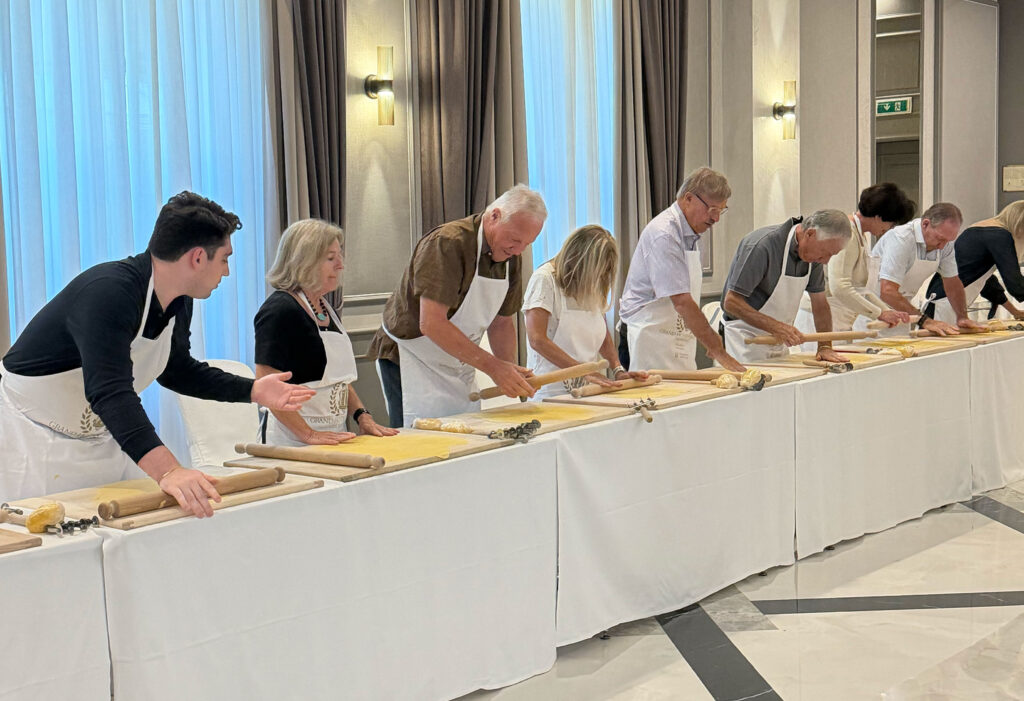
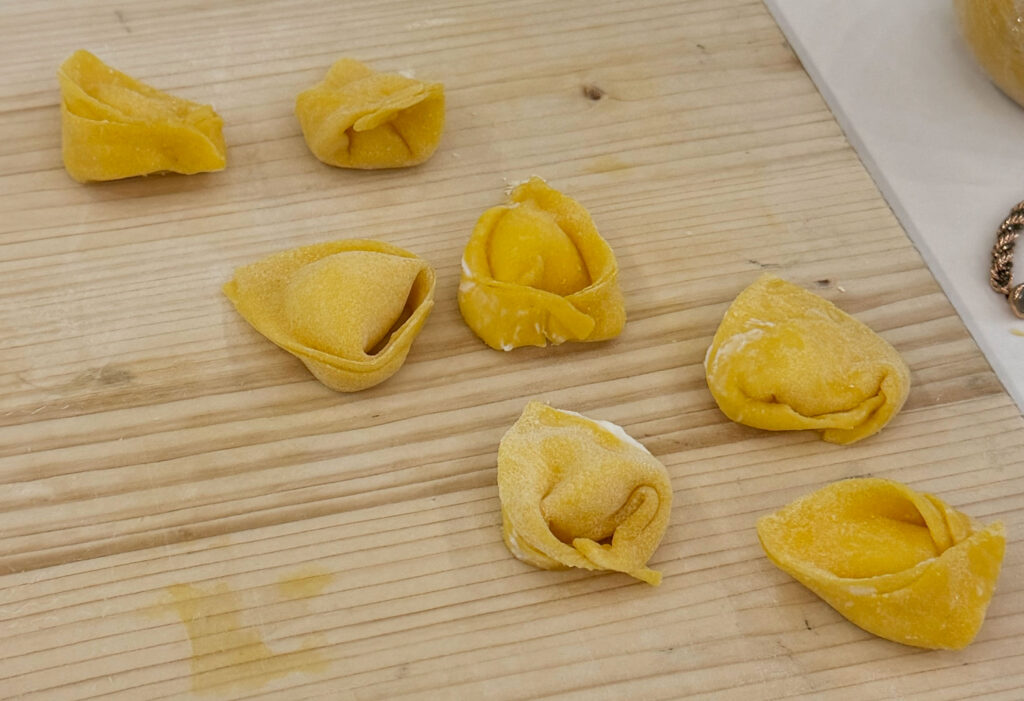
Add two eggs to a small volcano of flour. Whisk them together. Roll the dough thin, cut it into squares, add just a sprinkle of filling, then wrap each piece around your finger and pinch it into a perfect ring. I got the rolling part down. My first attempts at the rest were far from perfect. Eventually my hands found the rhythm: shape, fold, pinch, repeat.
They were perfectly imperfect.
Maybe I needed a lesson in patience from the Parmigiano. But there was something satisfying about making a food that requires so little to begin with. So much of traditional Italian cooking grew from that kind of resourcefulness – making the most of what was available, wasting little, turning simple ingredients into something worth gathering a table for. As the granddaughter of Italian immigrants, I felt that resourcefulness in my hands before I understood it in my head. I couldn’t help but find beauty in it.
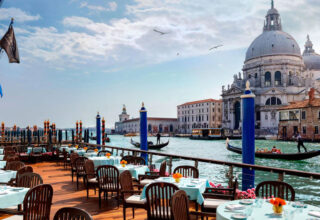
The song of Venice
And then there is Venice.
I arrived expecting gondoliers in striped shirts, cats standing watch from windowsills – an image that had lived in my imagination for years. Instead, it felt like entering a world designed for the romantic at heart. An entire city rises from the lagoon, more than a hundred islands stitched together by pedestrian bridges, gondolas and wooden Riva boats and water taxis weaving through its waterways in a choreography of their own.
To me, Venice was pure music. Boat horns on the Grand Canal. The chatter of seagulls overhead. Gondoliers serenading passengers along quieter canals. Orchestras performing outside cafés like the iconic Caffè Florian in Piazza San Marco.
And sometimes the music wasn’t something you could hear at all. It was the rhythm of the city itself.
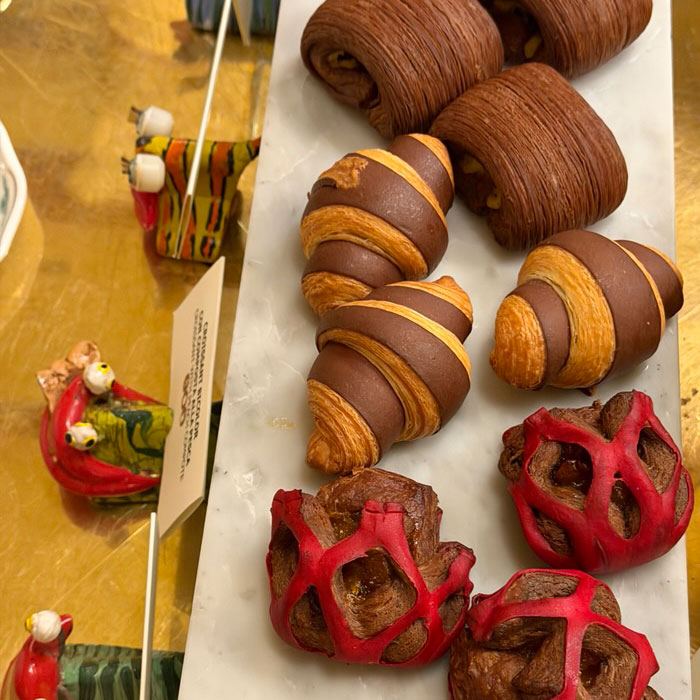
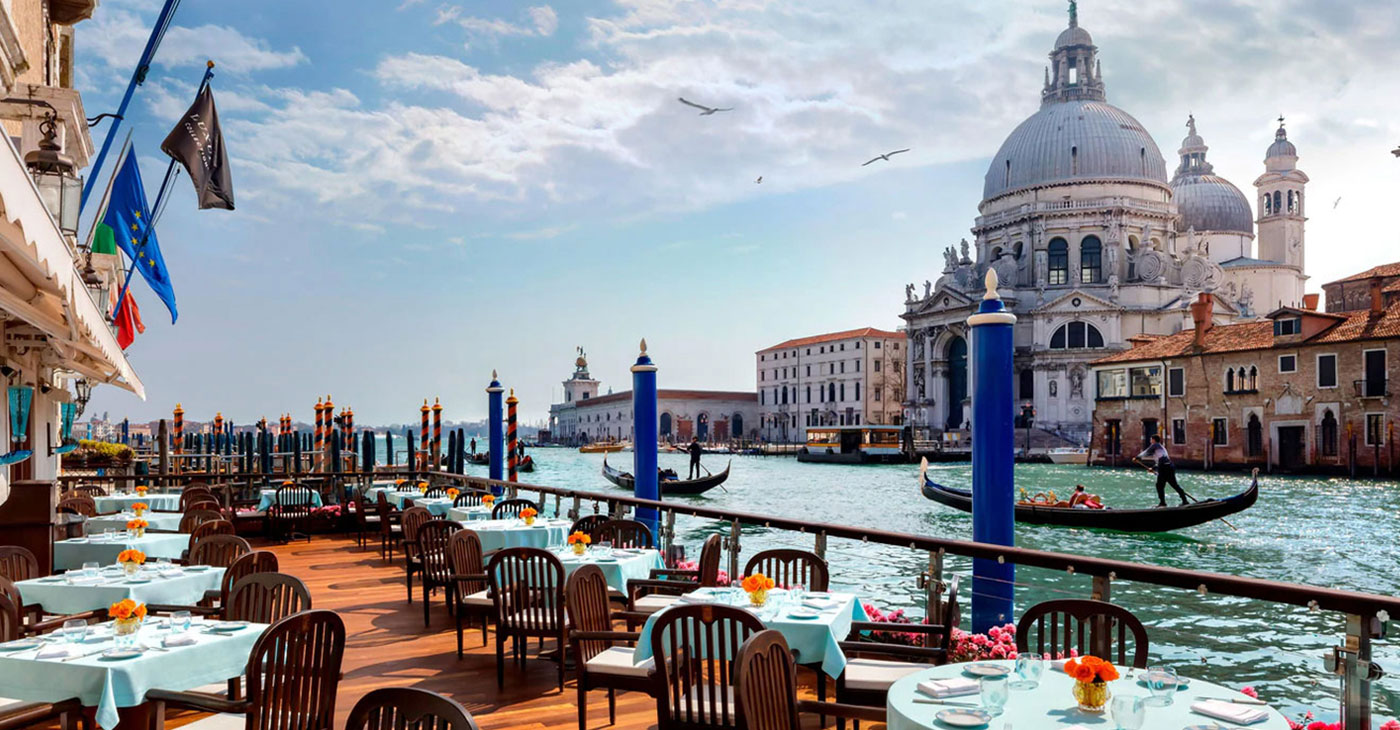
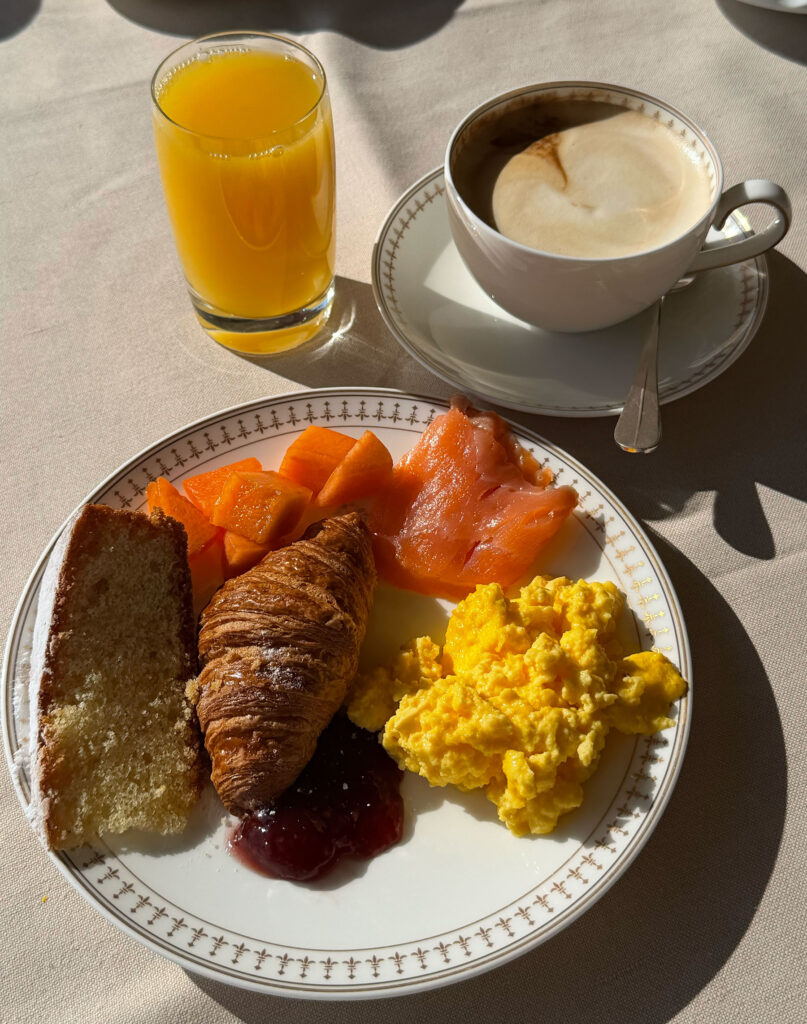
I felt it most at The Gritti Palace, set right on the Grand Canal. In the mornings, I found myself wishing time would slow on the Gritti Terrace. Freshly squeezed orange juice, eggs Benedict cooked to perfection, towers of pastries – all of it helped, but mostly I lingered because breakfast came with a front-row seat to a city that never looked the same twice. Gondolas drifted past. Water taxis disappeared into the distance. Across the canal, the dome of Santa Maria della Salute caught the changing light.
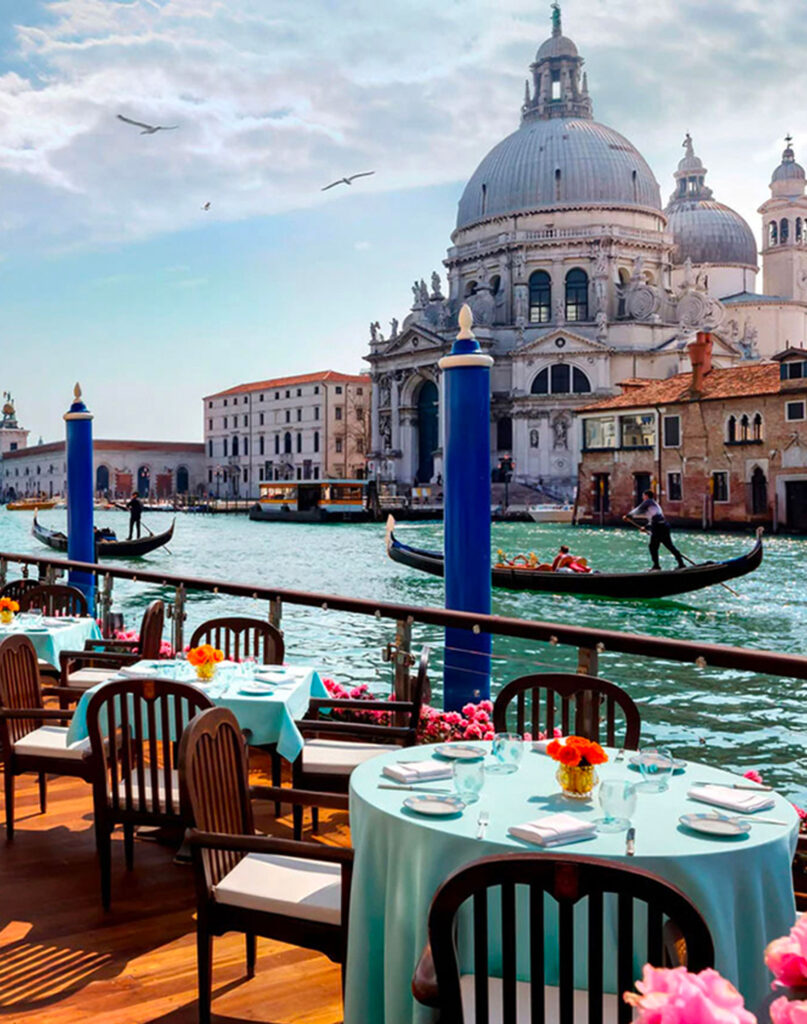
In the evening, the ritual moved to the hotel’s floating Riva Lounge, and a perfectly pink Bellini. The cocktail was born nearby at Harry’s Bar, where Giuseppe Cipriani combined Prosecco and white peach purée and named his creation after the Venetian Renaissance painter Giovanni Bellini – the drink’s rosy hue reminded him of the warm pink tones in Bellini’s paintings.
A drink inspired by the beauty of a painting. In the city of Vivaldi.
By then, it felt almost inevitable.
Celebrating beauty
For centuries, people here have found ways to preserve the beauty around them. Painters put it on canvas. Composers turned it into music. Farmers cultivated it. Cooks transformed it into recipes. Families passed those recipes down. And eventually, travelers like me arrived and tried to find our own ways to remember it.
Maybe that is what I came to understand about my journey on Bellissima Northern Italy.
Bellissima means beautiful, but the beauty I remember most isn’t confined to the landscapes, the architecture, the artwork. It lives in the glass raised at aperitivo, in ingredients that tell the story of the land they came from, in pasta shaped by hand, in meals shared with people who made the journey meaningful. To remember a place through your senses is a souvenir you cannot always hold in your hand.
There is beauty everywhere, if you know where to look.